Bust de Commodus
- Biographic data
- 161 - 192
Emperor from 180 to 192 - Date de création
- End of AD 180
- Type
- Type III, or of the "Vatican, Busti 368" type
- Material
- Chorodaki marble, Paros-2 field
- Dimensions
- H. 44 x l. 39 x P. 235 (cm)
- Inventory number
- Ra 118
- Photo credits
- Daniel Martin
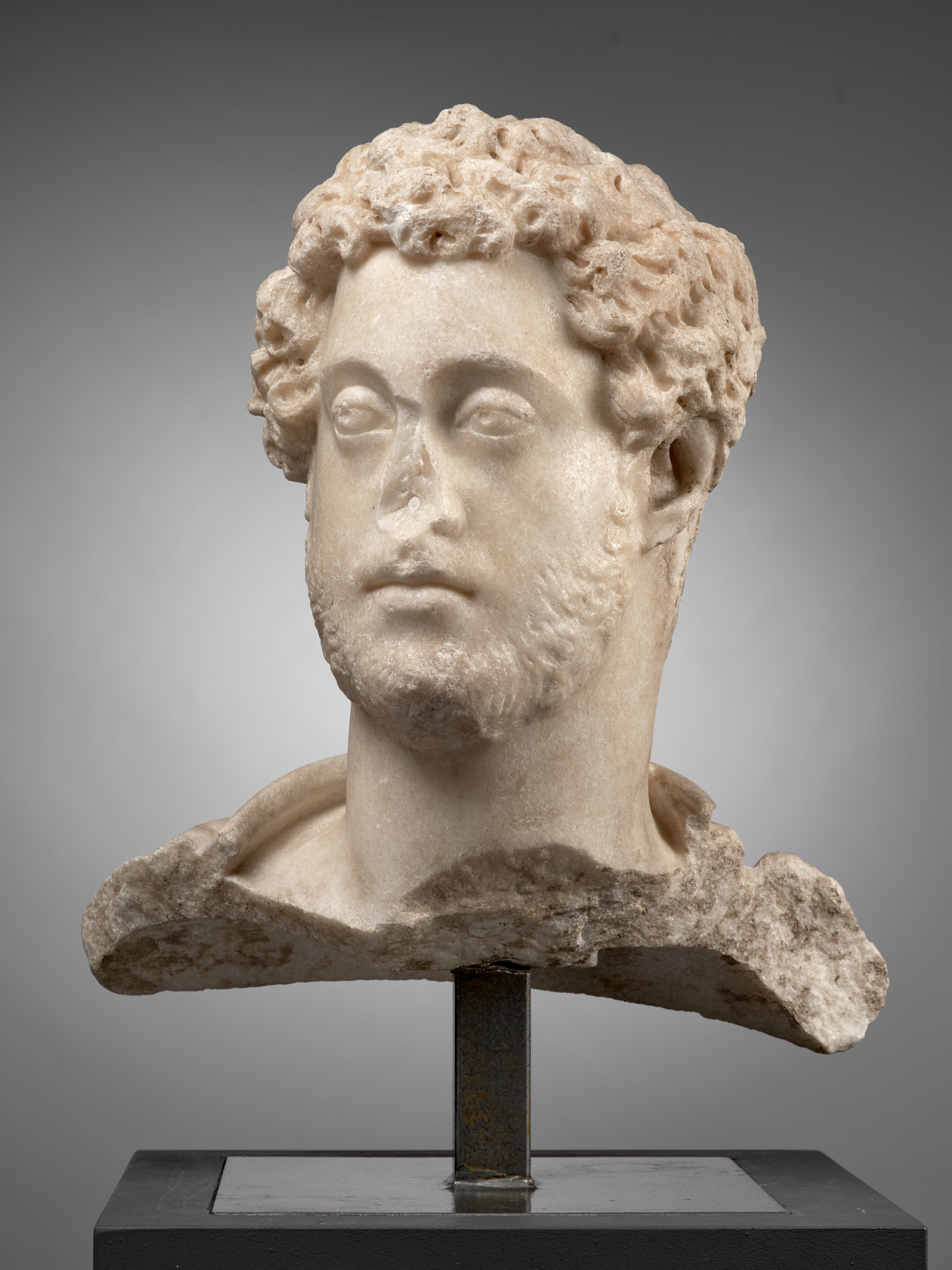
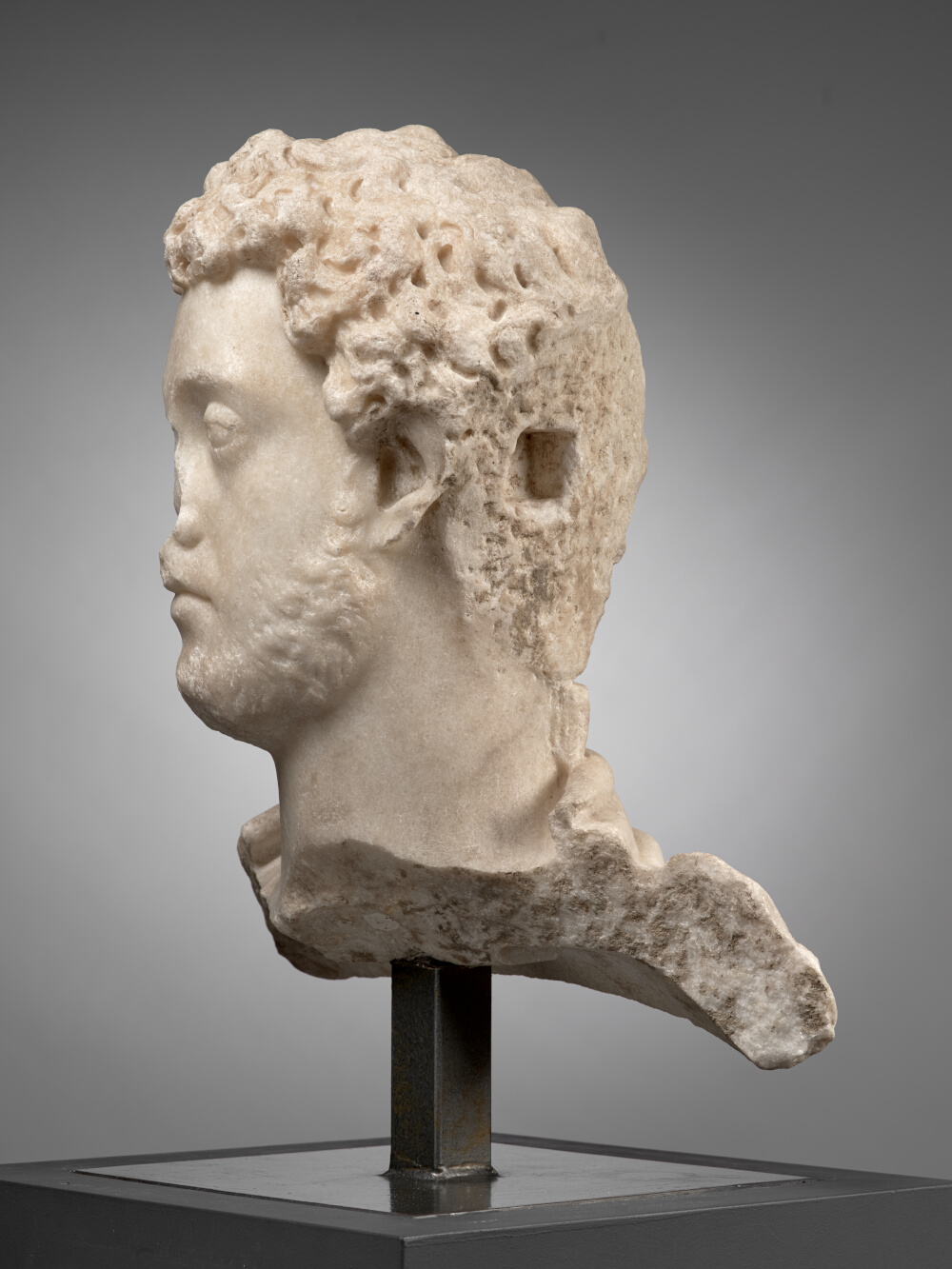
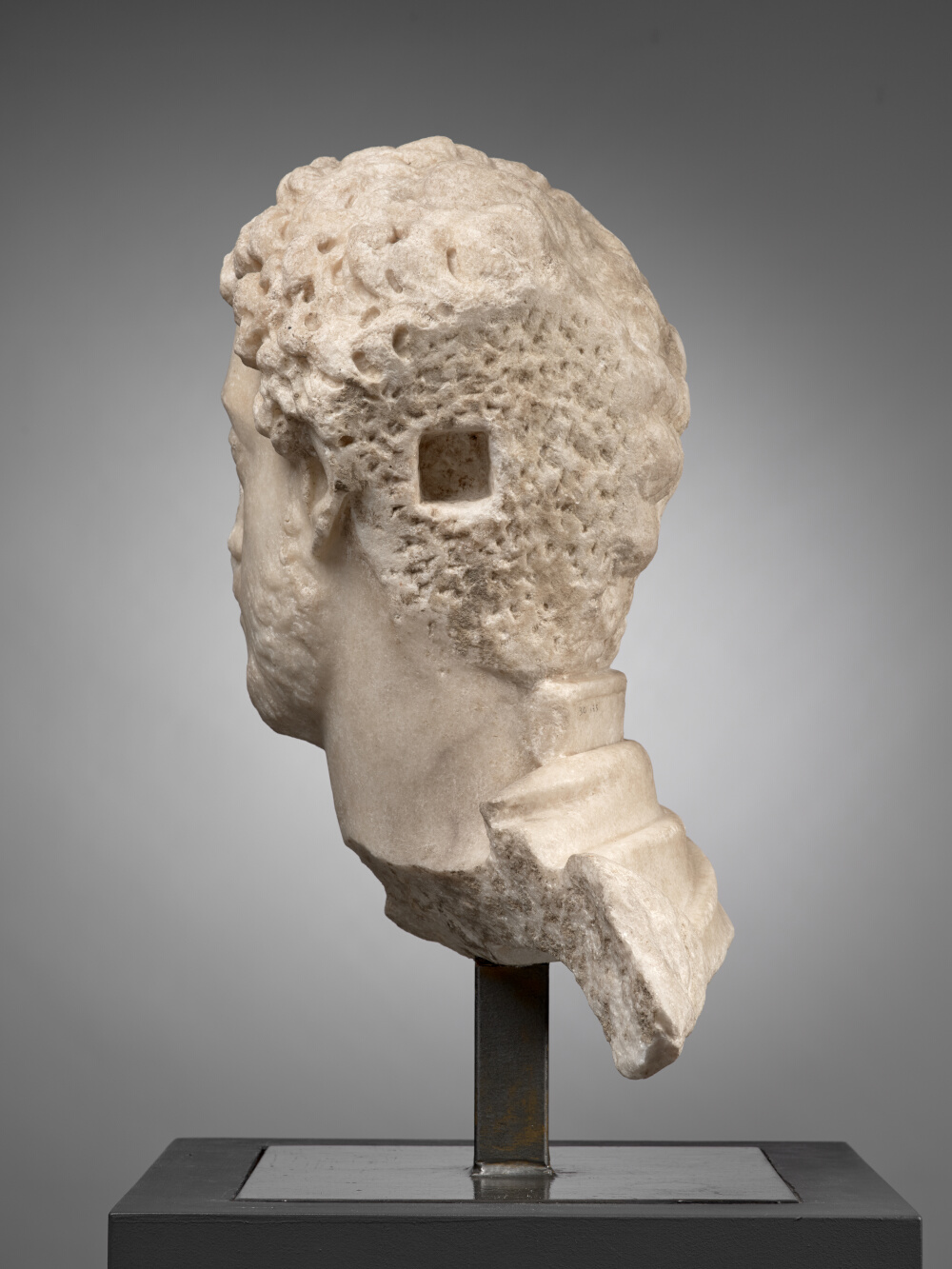
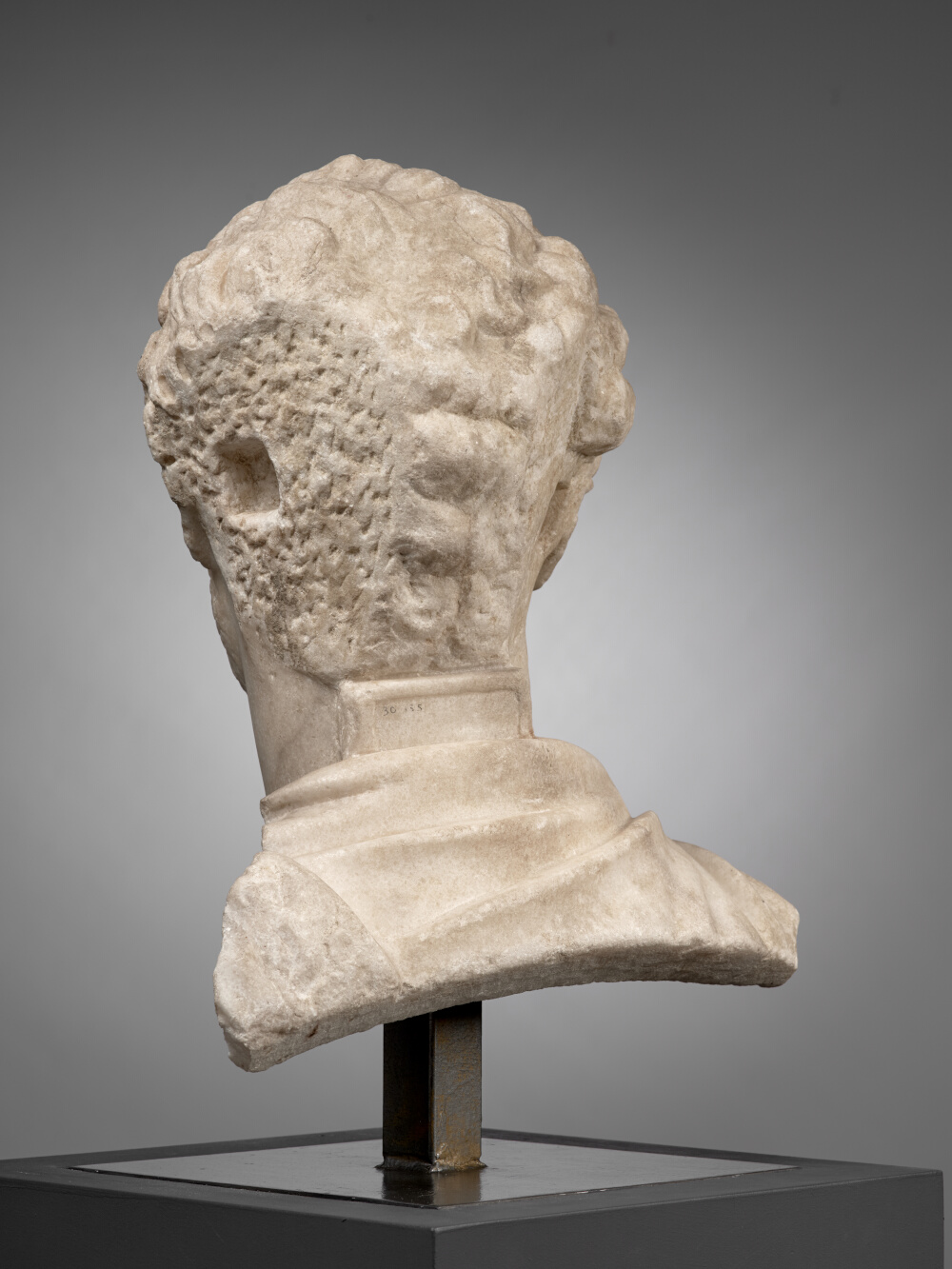
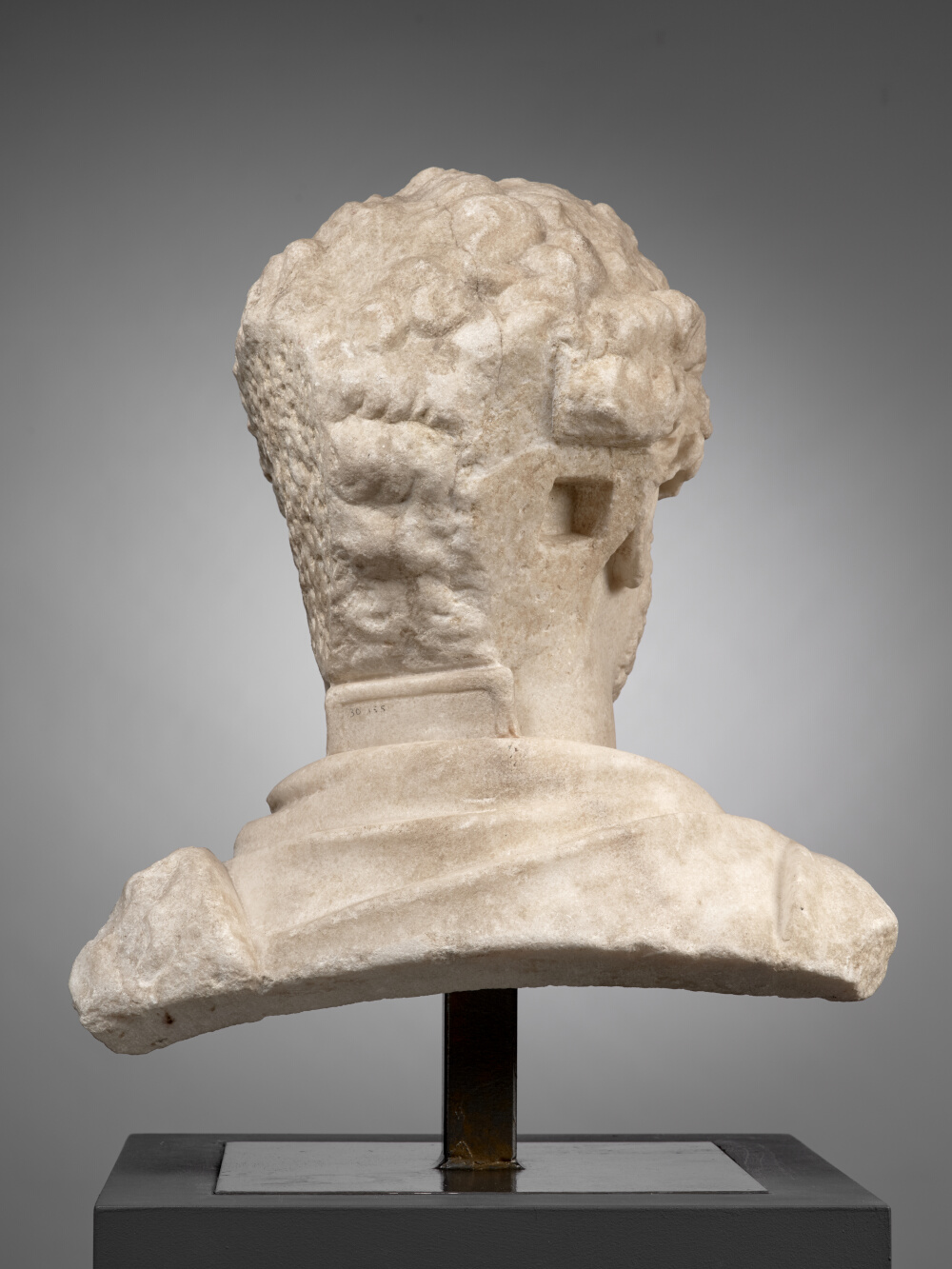
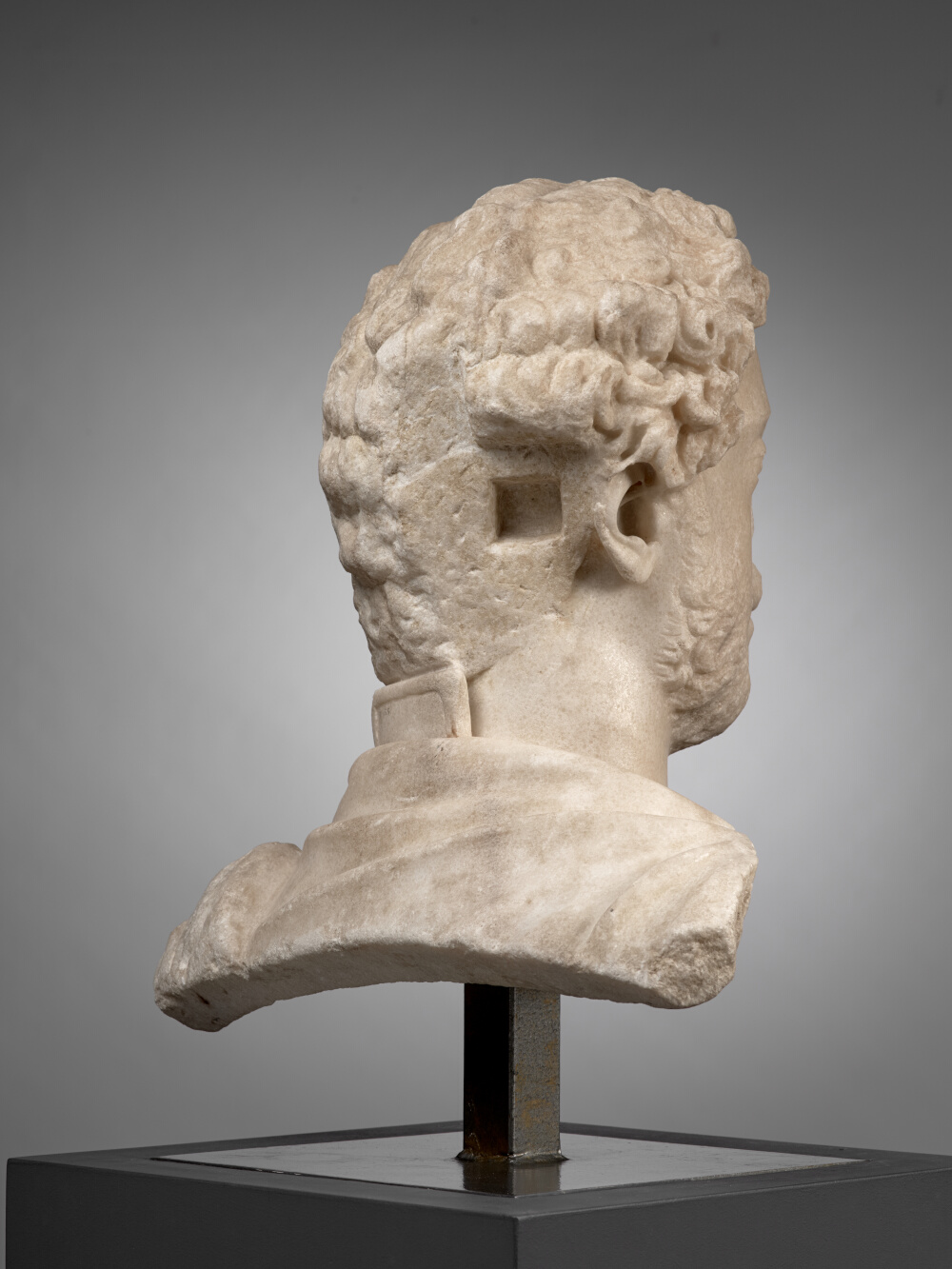
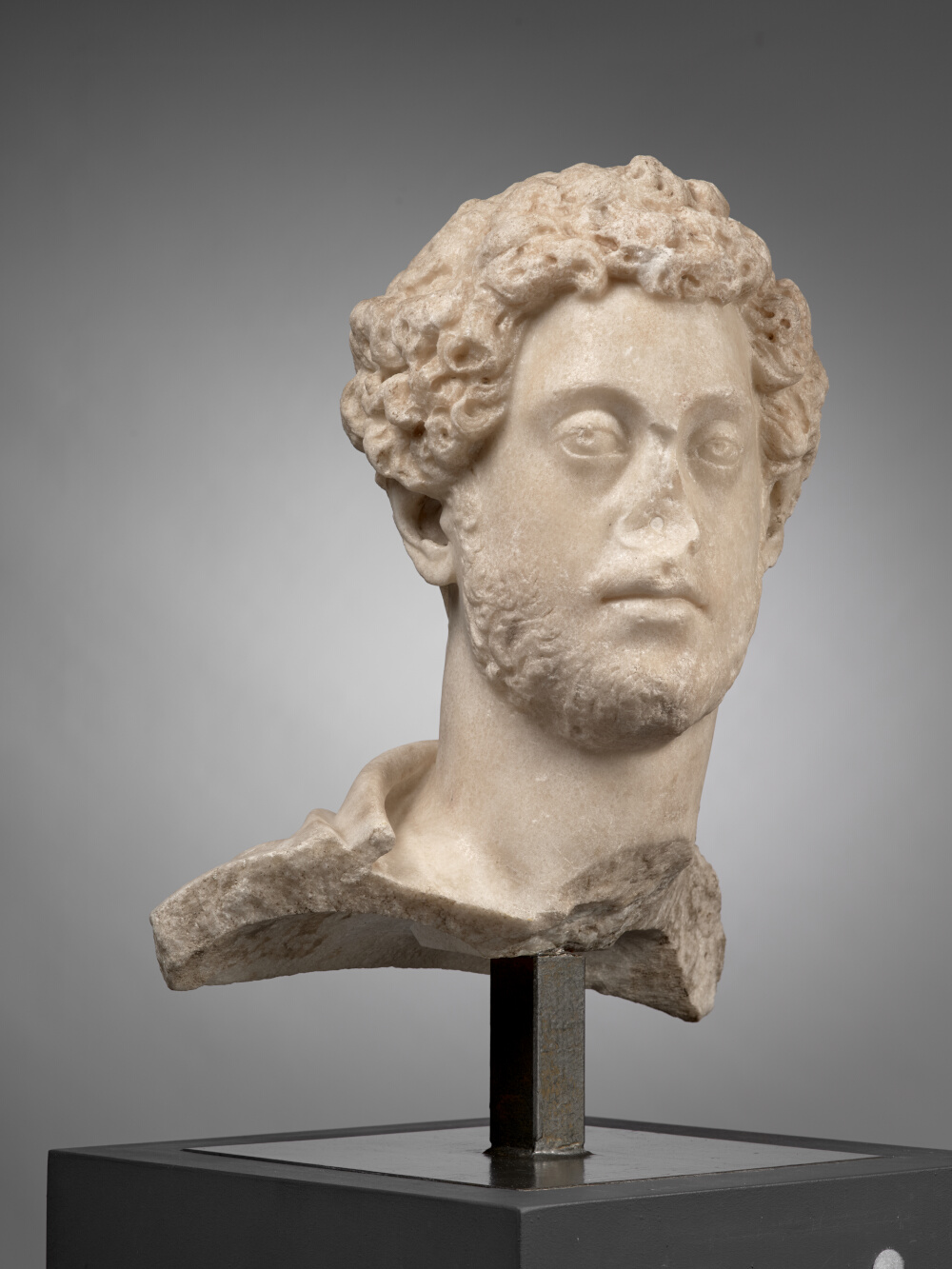
Until now, there had been some doubt as to the origin of this portrait. However, the discovery of a document signed by the mayor of Martres-Tolosane, J. de Roquemaurel, dated 19 September 1826, has resolved this uncertainty. This document, entitled ‘État des monumens Antiques existans chez le vieux Gabriel Saboulard, de Martres, et dont l’acquisition a été convenu (sic) avec la direction du Musée de Toulouse’ (Gorsse archival fonds, Saint-Gaudens, Comminges branch of the Haute-Garonne Departmental Archives, 92 J 1 – 92 J 744), provides an inventory of the works then in the owner’s possession. Among the twenty-two sculptures and fragments discovered by chance by Gabriel Saboulard on land situated on the left bank of the Garonne, several elements now make it possible to identify the effigy of Commodus with the ‘youthful head of a man measuring seventeen inches (43.18 cm) in height’. The old description states that « the bust once existed in its entirety ; but the lower part has been broken ; only the section attached to the shoulders remains ; a square hole was once cut on each side of the head behind the ears ». Nothing in this description now seems to preclude this identification.
Pascal Capus
The sinister Emperor Commodus, son of Marcus Aurelius and Faustina the Younger, was to be the last representative of the Antonine dynasty. He was born in the family villa, in Lanuvium in the Alban Hills, south of Rome. As the grandson of Antoninus Pius, he spent his childhood at court, and was involved in the workings of the Empire at his father’s behest by the age of sixteen. The twelve and a half-year reign of this emperor who was fascinated by gladiators resulted in a number of iconographic types, eight or nine in fact: three throughout his childhood and five or six throughout adulthood.
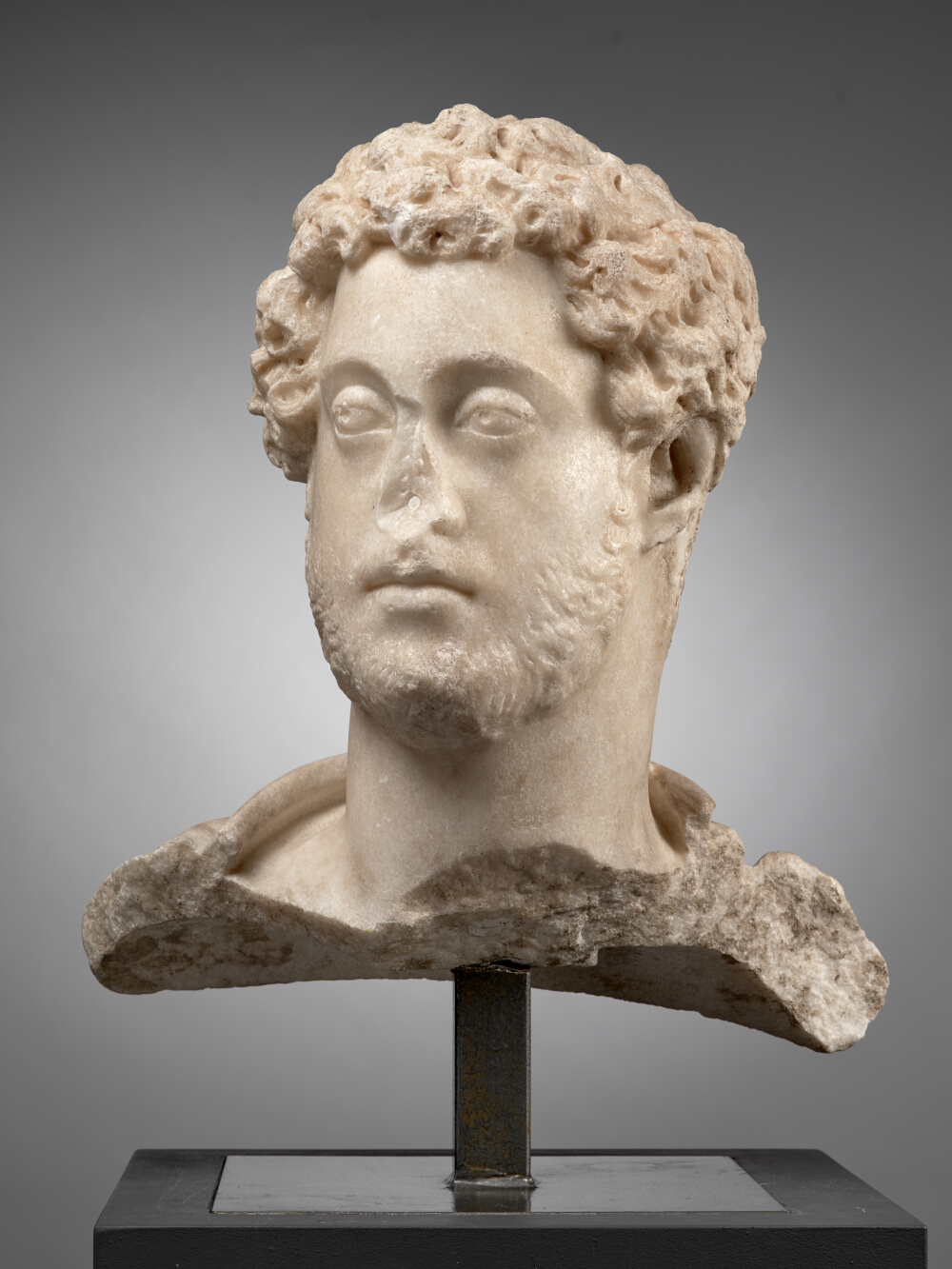
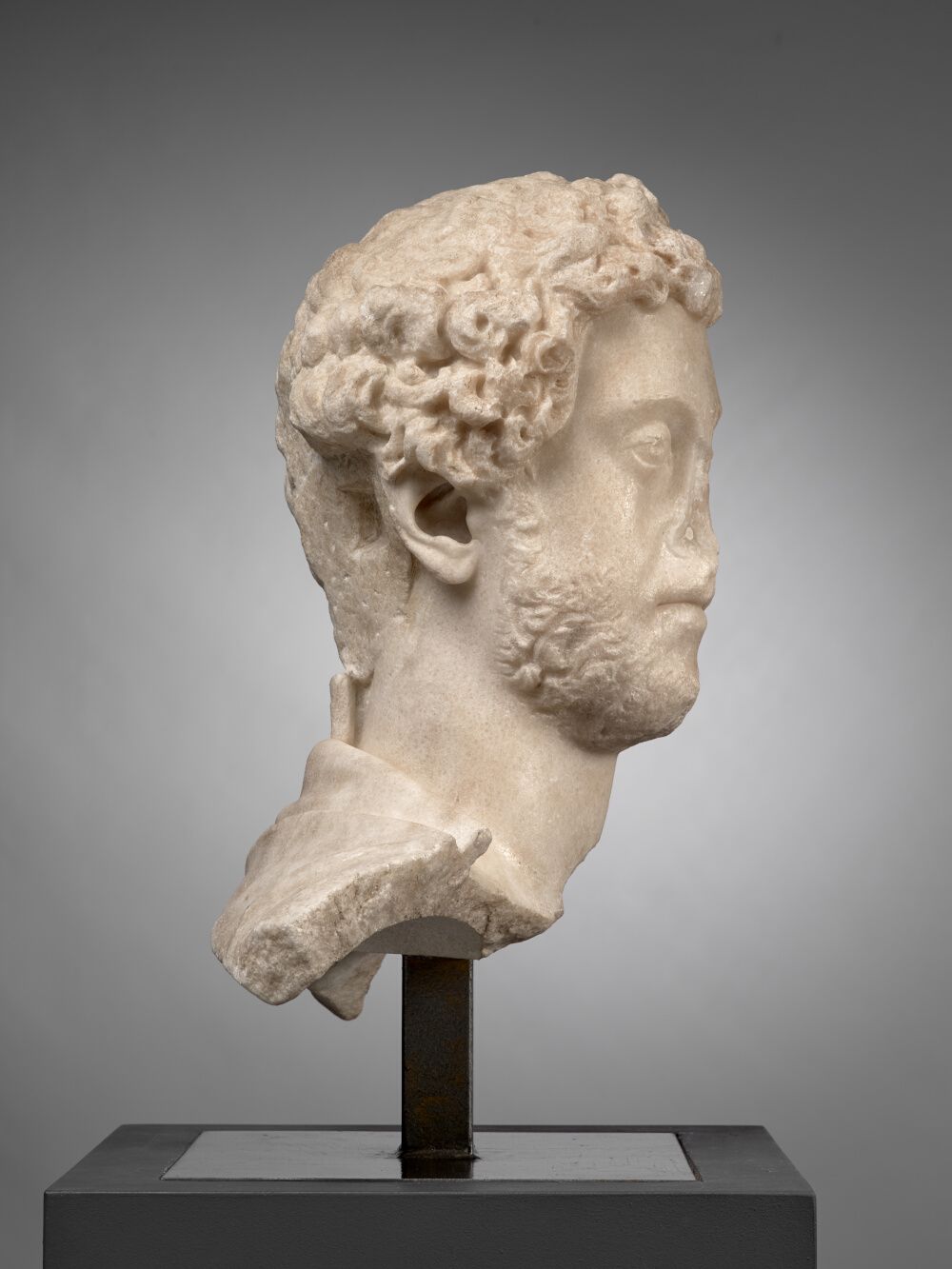
Type III, to which the Toulouse bust belongs, was created when the prince became the sole emperor following the death of his father in 180. It is therefore generally dated to the last months of the year. This portrait is the first to show the emperor wearing a full beard that covers his cheeks and chin. Commodus was 19 years old at the time, and therefore an adult. There are currently ten such replicas, now kept in the Sala dei Busti at the Vatican (368, inv. 617, first issue, or « Leitstück », because of its quality and state of conservation), in the Loggia Scoperta, also at the Vatican (25 [16]), in Copenhagen (Glyptothek Ny Carlsberg 715, inv. 1901), Liverpool (Ince Blundell Collection 438), Malibu (J. Paul Getty Museum, inv. 92.SA48, formerly at Castle Howard), Mantua (Palazzo Ducale, inv. 6730), which is the closest example to the one in Toulouse in many respects, Naples (Museo nazionale), Paris (Louvre MA 1127), and Rome (Musée des Thermes 699, inv. 124489).
The work at the Musée Saint-Raymond is characterised by the lack of definition of hair and face, a strange blur that gives the impression of an unfinished portrait. Behind the ears, two areas show where parts that were certainly broken when the sculptor attempted to further detail the pavilion of the ear or nape of the neck were once reattached with glue or mortises.
According to J.-C. Balty 2012, Les portraits romains, 1 : Le siècle des Antonins, 1.2 (Sculptures antiques de Chiragan (Martres-Tolosane), Toulouse, p. 249-257.
Bibliography
- Balty, Cazes, Rosso 2012 J.-C. Balty, D. Cazes, E. Rosso, Les portraits romains, 1 : Le siècle des Antonins, 1.2 (Sculptures antiques de Chiragan (Martres-Tolosane), Toulouse. p. 56, 59, 73-74, fig. 55, 57, 71-73, p. 250, 252-256, fig. 179-180, 182-184, 186-188
- Braemer 1952–1953 F. Braemer, « Les portraits antiques trouvés à Martres-Tolosane, » Bulletin de la Société Nationale des Antiquaires de France, pp. 143–148. p. 143-148
- Cazes et al. 1999 D. Cazes, E. Ugaglia, V. Geneviève, L. Mouysset, J.-C. Arramond, Q. Cazes, Le Musée Saint-Raymond : musée des Antiques de Toulouse, Toulouse-Paris. p. 127
- Espérandieu 1908 É. Espérandieu, Recueil général des bas-reliefs de la Gaule romaine, 2. Aquitaine, Paris. p. 68-69, no 965
- Joulin 1901 L. Joulin, Les établissements gallo-romains de la plaine de Martres-Tolosane (Mémoires présentés par divers savants à l’Académie des inscriptions et belles-lettres",), Paris.
- Rachou 1912 H. Rachou, Catalogue des collections de sculpture et d’épigraphie du musée de Toulouse, Toulouse. p. 59, no 118
- Rosso 2006 E. Rosso, L’image de l’empereur en Gaule romaine : portraits et inscriptions (Archéologie et histoire de l’art), Paris. p. 465-466, no 223
- Wegner 1939 M. Wegner, Die Herrscherbildnisse in antoninischer Zeit (Das römische Herrscherbild), Berlin. p. 272
- Wegner, Unger 1979–1980 M. Wegner, R. Unger, « Verzeichnis der Kaiserbildnisse von Antoninus Pius bis Commodus, » Boreas. Münstersche Beiträge zur Archäologie, 2–3, pp. 87–181. p. 12-116, 180
- Musée Saint-Raymond 1990 Musée Saint-Raymond, Le cirque romain. Exhibition, Musée Saint-Raymond, Toulouse, 1990, Toulouse. no 12
- Musée Saint-Raymond 2011 Musée Saint-Raymond, L’image et le pouvoir : le siècle des Antonins. Exhibition, Musée Saint-Raymond, Toulouse, 19 November 2011 - 18 March 2012, Toulouse. p. 72
- Musée royal de Mariemont 2018 Musée royal de Mariemont, Au temps de Galien : un médecin grec dans l’Empire romain. Exhibition, Musée royal de Mariemont, Morlanwelz, Belgique, 26 May - 2 December 2018, Paris ; Morlanwelz (Belgique). III.A.2, p. 309
To cite this notice
Capus P., "Bust de Commodus", in The sculptures of the roman villa of Chiragan, Toulouse, 2019, online <https://villachiragan.saintraymond.toulouse.fr/en/ark:/87276/a_ra_118>.